

When visiting Japanese temples, you may encounter a mysterious kind of garden—one that suggests flowing rivers or vast oceans, despite the complete absence of water.
This is “枯山水 Karesansui,” the Zen dry landscape garden.
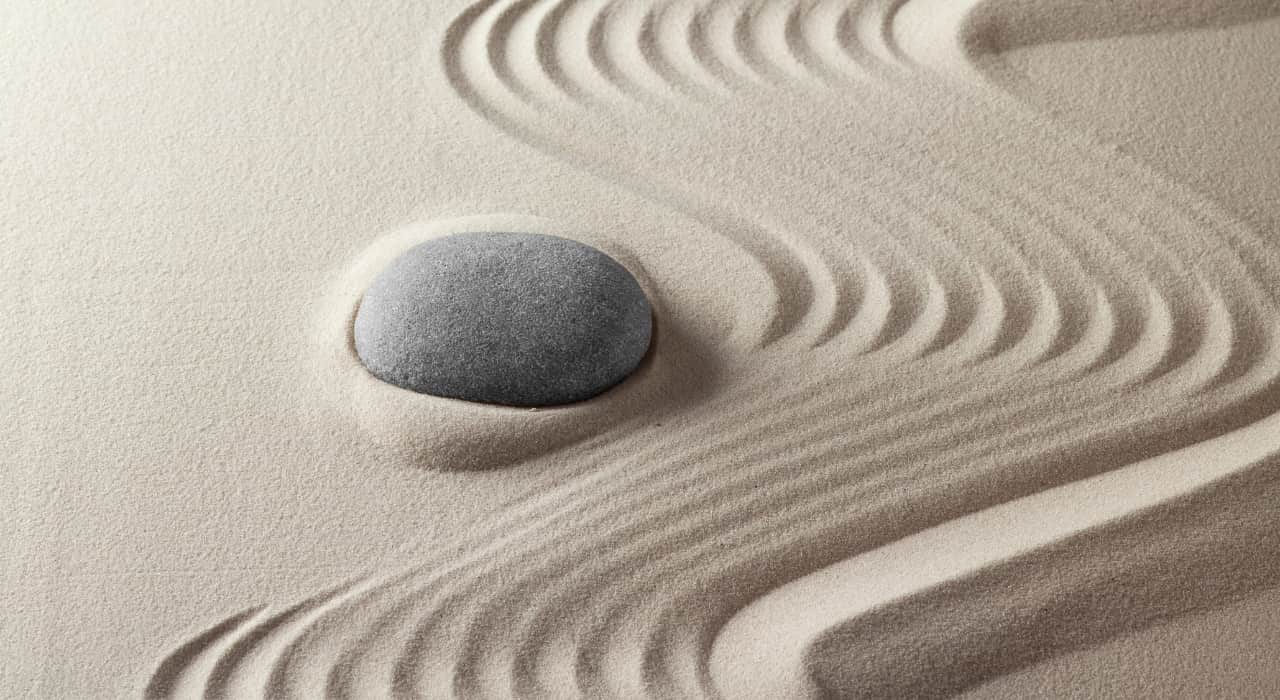
At first glance, all you see is an expanse of white sand and carefully placed, inorganic stones. There are no colorful flowers, no trees swaying in the wind, no soothing sound of a waterfall. And yet, as you sit in silence, something curious begins to happen. The raked sand starts to resemble a raging sea, while the stones transform into islands floating in a sea of clouds.
Why did the Japanese deliberately create gardens that appear almost empty? By stripping away dynamic elements like flowing water and color, Karesansui invites the viewer to engage imagination and inner stillness instead. In this article, we explore the philosophy behind these minimalist landscapes—and the quiet lessons they offer for navigating our high-stress, information-overloaded modern lives.
History and Philosophy: Expression Born from Limitation
Karesansui evolved uniquely between the 14th and 16th centuries, when Zen Buddhism permeated the samurai class. In mountain temples where bringing in water was difficult, monks used their ingenuity: “If there is no water, simply visualize it in your mind.” This paradoxical thinking is the heart of Karesansui.
Key philosophies here are “侘び寂び Wabi-Sabi“ (the beauty of imperfection) and “見立て Mitate“ (the art of seeing one thing as another). The gardener intentionally leaves things unsaid. By creating “empty space,” they invite the viewer’s imagination to fill it. Whether the stones look like a family of tigers or a distant galaxy depends entirely on the viewer’s state of mind. In essence, a Zen garden is not just “scenery outside,” but a “mirror reflecting your inner self.”
The Concept of “Yohaku” for Professionals
In today’s business environment—especially in the fast-paced world of Japan—we are constantly bombarded by information: emails, notifications, KPIs, and endless communication. Our brains are suffering from a chronic lack of “余白 Yohaku“ (empty space).
Zen teaches the concept of “放下著 Hoge-jaku,” which means “to let go of all attachments.” Spending time in a Karesansui garden is not just a break; it is a sophisticated form of mental training. It activates the brain’s “Default Mode Network,” organizing scattered thoughts. By simply letting your eyes follow the rhythmic lines of the sand, you may find your heart rate stabilizing and your intuition sharpening. Leading business figures embrace Zen because they know that true creativity and calm judgment are born from this state of “nothingness.”
4 Recommended Zen Gardens
- 龍安寺(京都) / Ryoan-ji (Kyoto)
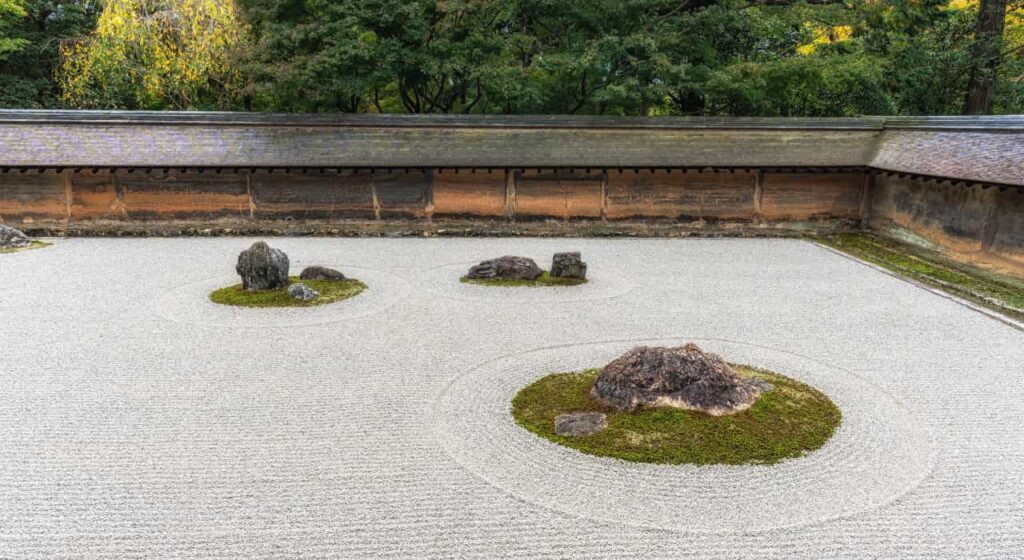 The world’s most famous rock garden. It features 15 stones, but they are arranged so that only 14 can be seen at once from any angle, inviting deep contemplation.
- 慈照寺 銀閣(京都) / Jisho-ji Ginkaku (Kyoto)
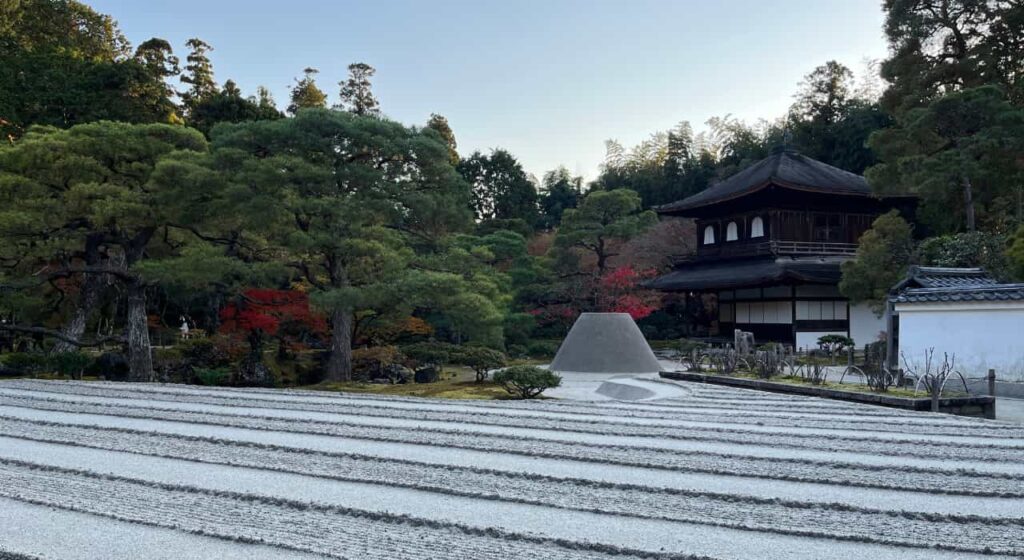 Ginkaku highlights are the conical “向月台 Kogetsudai” and the wave-like “銀沙灘 Ginshadan.” These three-dimensional, geometric sand formations are unlike any others. Some say they were designed to reflect moonlight, and their serene beauty detaches the viewer from reality.
- 大徳寺 瑞峯院(京都) / Daitoku-ji Zuiho-in (Kyoto)
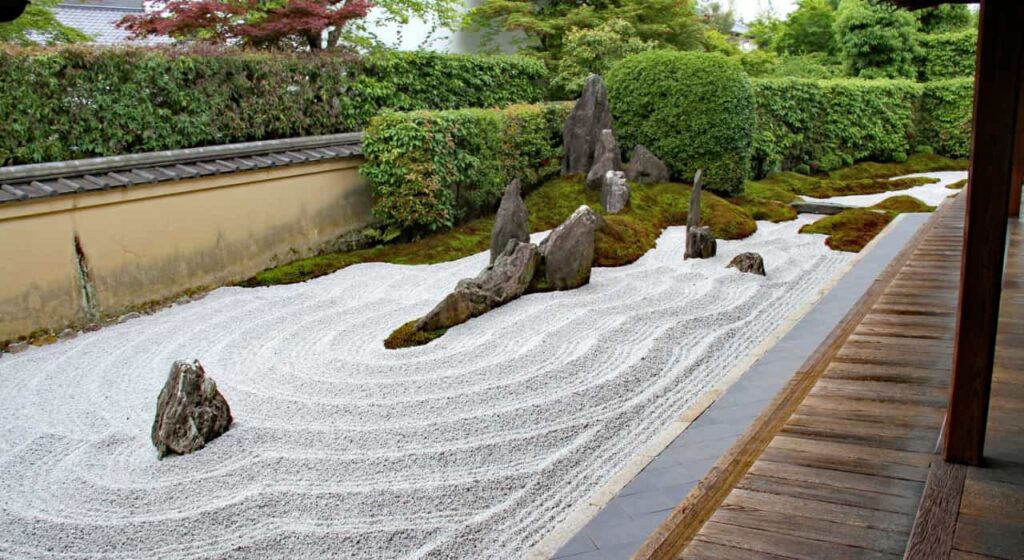 Known for its powerful sand ripples. The patterns representing a rough sea evoke a sense of quiet passion in the face of adversity.
- 浄妙寺(神奈川、鎌倉) / Jomyo-ji (Kanagawa, Kamakura)
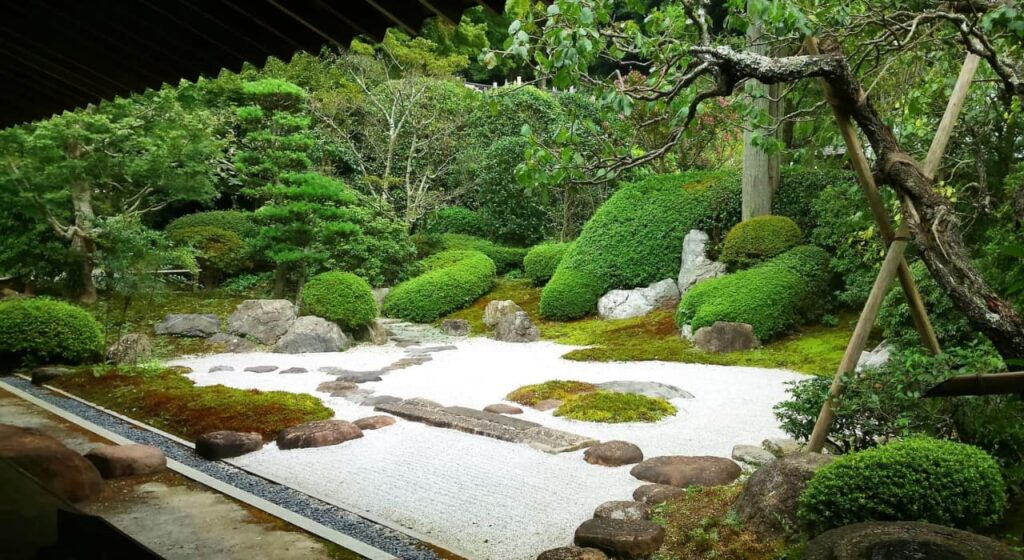 An ancient temple in Kamakura, just an hour from Tokyo. It features a beautiful Karesansui garden and a tea house, “喜泉庵 Kisen-an,” where you can enjoy matcha while gazing at the scenery—a perfect spot to escape the city’s hustle.
Karesansui is more than just an ornament; it is a tool to reclaim the “silence” and “self” that we often lose in our busy lives. This weekend, why not take a moment to visit and find your own peace in the ripples of the sand?
📩 For more articles
・Subscribe to the Newsletter
🌟 Interested in working in Japan’s tech industry?
・Contact us from the contact form
・Explore job opportunities on our Job Board for Foreign Engineers
・Follow us on Linkedin to stay updated!