


Executive Summary
Found an apartment in Japan that looks right? Before you sign, check three things: whether the space works for your daily routine, how much you will pay beyond the advertised rent, and what happens when you renew or move out. Ask for an itemised cost estimate and the proposed contract, then get any unclear terms explained before committing.
If you work from home, pay particular attention to noise, desk space and the internet available in the actual apartment. Use the viewing checklist and questions below to compare properties—and avoid choosing a place that looks good in photos but makes everyday life harder.
Start with the Week You Will Actually Live There
A bright living room can make you forget about the crowded commute or the lack of space for a desk. Before booking viewings, write down your non-negotiables: your total monthly budget, move-in date, commute, household members and any pets.
For a tech professional, the working week matters too. Confirm your expected office location and attendance requirements with your employer. A neighbourhood that works for one office day a week may feel very different when you travel there four days a week.
- Monthly budget: Include management fees, utilities, internet and any recurring charges—not just rent.
- Commute: Check the journey from the apartment door to the office, including transfers and the walk at each end.
- Home working: Think about calls, daylight, power outlets and somewhere to leave your equipment set up.
- Length of stay: Consider whether you need flexibility to relocate or want a home you can potentially keep for several years.
Give the agent these priorities early. “A quiet place with room for a desk and a manageable commute” is more useful than “somewhere nice near the station.”
What Should You Check During a Viewing?
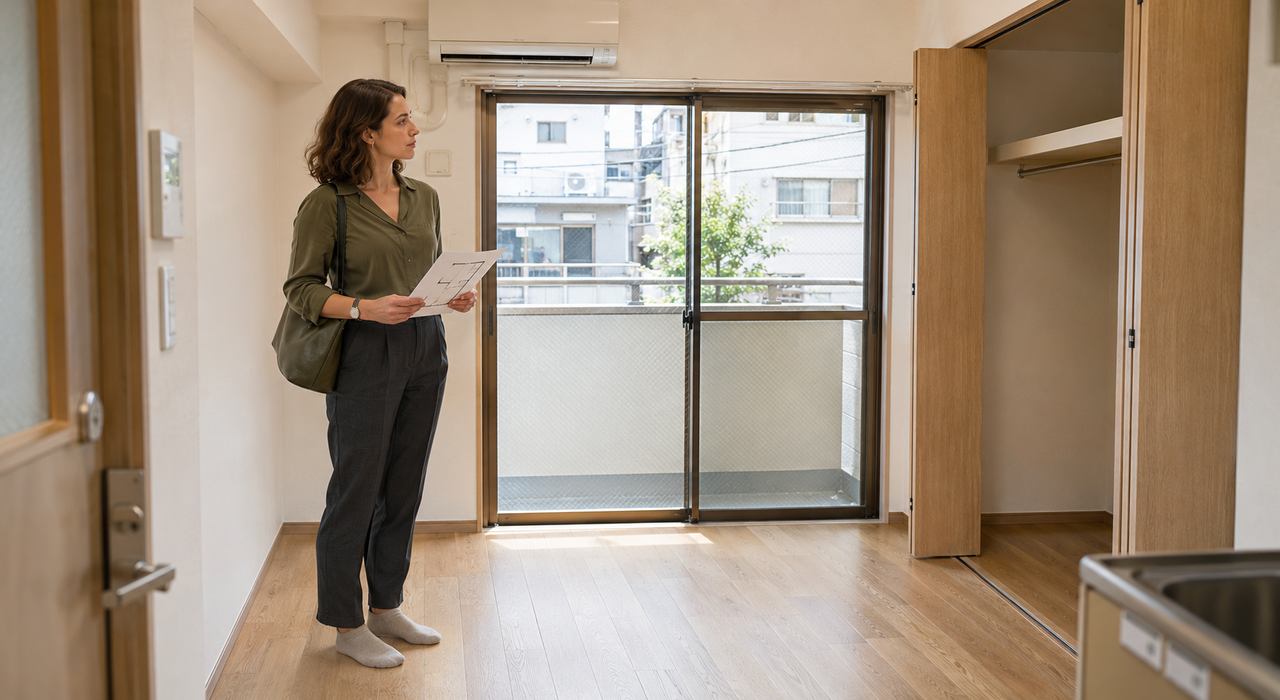
Bring a tape measure, your phone and the dimensions of any furniture or appliances you plan to use. Ask permission before taking photos, and make notes for each property while the details are fresh.
| What to check | What to look for or ask |
|---|---|
| Noise and privacy | Listen with the windows open and closed. Notice roads, railway lines, shared corridors and nearby businesses. Ask about planned construction. |
| Light and ventilation | Check window positions, extractor fans, condensation marks and musty smells. Remember that a short viewing only shows conditions at that time. |
| Your working space | Measure space for the desk and chair, including room to move behind the chair. Locate outlets and consider glare on your screen. |
| Appliances and fittings | Confirm which items are included, whether they work and who handles repairs. Measure refrigerator and washing-machine spaces and the delivery route. |
| Internet and mobile reception | Ask what service is available in this specific unit, whether it is active, and whether installation needs permission. Check your phone signal indoors. |
| Daily practicalities | Find the rubbish collection area, bicycle parking, mailbox and delivery facilities. Check any rules or additional charges. |
| Building and neighbourhood | Check entrances, locks, shared-area maintenance and evacuation routes. Walk to the station and nearby shops rather than relying only on the listing. |
If possible, revisit the neighbourhood at a time you would normally be coming home. A quiet weekday afternoon does not tell you everything about the evening atmosphere.
For internet, “available in the building” is a starting point for questions. Ask what you would need to arrange before your first working day, including any installation and temporary connection.
Ask for Three Cost Totals, Not Just the Rent
Request an itemised estimate in JPY, showing applicable taxes, payment deadlines and whether each charge is mandatory or optional. Separate the money into three groups: what you pay before moving in, what you pay regularly, and what may become payable when you renew or leave.
| Charge | What to clarify |
|---|---|
| Rent and management or common-service fees | The combined monthly amount, payment method and when charges start. Ask how any partial first month is calculated. |
| Security deposit: shikikin(敷金) | The amount held, the deductions provided for in the contract and how the remaining balance will be returned after settlement. |
| Key money: reikin(礼金) | Whether it applies. This is generally a non-refundable payment to the landlord, separate from the security deposit. |
| Agency fee | The amount payable to the real estate agency and whether the quoted figure includes tax. |
| Rent guarantee fees | Initial charges and any recurring or renewal charges. Ask which guarantee company the property accepts. |
| Insurance and other services | Required coverage, premiums, key replacement, support services and any optional packages. |
| Renewal and move-out charges | Any renewal fees, early-termination penalties, cleaning charges or agreed deposit deductions. |
“No deposit” does not mean “no move-out costs.” Likewise, a property with no key money may have other charges. Compare the full written estimates over the same intended length of stay.
If you are asked to pay money before the rental agreement is concluded, ask what the payment covers and what happens if the rental does not proceed. Get the explanation and a receipt in writing.
Clarify Screening and Guarantee Requirements Early
Ask the agent for the documents required for the specific property. Depending on the application, these may include identification, residence documentation, proof of income or employment, and information about other occupants. If you have not started your new job yet, ask whether an offer letter or employment contract is acceptable.
Many rentals involve a personal guarantor or a rent guarantee company. A guarantee company can pay the landlord when a tenant fails to pay, but the tenant still owes the money. The guarantee fee is not insurance that removes your responsibility for rent.
Also clarify whether an emergency contact is required and what that person is being asked to agree to. An emergency-contact role and a financial-guarantor role are different; do not ask someone to sign without understanding the responsibility.
If you need language support, raise that before the contract appointment. The Ministry of Land, Infrastructure, Transport and Tourism provides an English apartment-search guide, including explanations of rental procedures and common terms.
Check the Lease Type and Your Exit Options
Ask the agent to identify the lease type in the contract—not just tell you its length.
- Ordinary lease: futsu shakka(普通借家). This type generally allows renewal, with legal protections affecting a landlord’s ability to refuse it. Check the renewal process and any agreed fees.
- Fixed-term lease: teiki shakka(定期借家). This type ends at the agreed expiry without renewal. A new agreement may be possible if both parties agree, but you should not assume one will be offered.
A fixed-term lease may suit a clearly planned stay. If you want a longer-term home, understand what would happen if a new agreement were unavailable.
Expiry and early departure are separate questions. Ask how much notice you must give, how to give it, whether early termination is permitted and whether a short-stay penalty applies. Do not assume that every property uses the same notice period.
Before signing through an agency, go through the explanation of important matters, often called juyo jiko setsumei, as well as the rental agreement itself. Ask for clarification of any unfamiliar wording, especially special provisions about fees, cleaning, repairs and restrictions.
Check rules on additional occupants, pets, smoking, alterations and permitted use. If you plan to work from home, explain what that involves—particularly if clients would visit or you would use the address for business registration.
Understand Move-Out Costs Before Moving In
Japan’s restoration concept, genjo kaifuku, does not generally mean paying to make an ageing apartment brand-new. MLIT guidance distinguishes normal wear and ageing from damage caused by a tenant’s negligence, intentional actions or use beyond normal living.
However, special provisions may address costs such as professional cleaning. Ask what work is covered, how the amount is calculated and when it becomes payable. If a clause seems unclear or unreasonable, seek an explanation or independent advice before accepting it.
When you receive the keys:
- Photograph existing scratches, stains, damaged fittings and other problems before unpacking.
- Complete the move-in condition checklist and report problems promptly in writing to the landlord or manager.
- Keep your photos, reports, contract and payment records together.
- Confirm whom to contact when something breaks; ask before arranging repairs or alterations yourself.
At move-out, request an itemised explanation of deductions or additional charges and compare it with your records. MLIT’s English guide to restoration and move-out costs explains the general principles and examples.
Five Questions to Ask Before You Sign
You can take these questions to the agent or send them before the contract appointment:
- “Could you send me the complete initial-cost estimate, the recurring charges and any renewal or move-out fees?”
- “Is this an ordinary lease or a fixed-term lease, and what happens at the end?”
- “If I need to leave early, what notice, procedure and charges apply?”
- “Which cleaning costs or deposit deductions are specified in the contract?”
- “Could you confirm the included equipment, internet arrangements and any permissions I need for working from home?”
Ask the agent to confirm important answers in writing and show you where they appear in the documents. You should be able to explain the main costs and conditions in your own words before signing.
Frequently Asked Questions
Do I need to use a rent guarantee company in Japan?
Many rental properties require tenants to use a designated rent guarantee company, even if they can provide a personal guarantor. Before applying, ask which company you must use, what screening is required, and what initial and recurring fees apply. You may also need an emergency contact or, in some cases, a personal guarantor. A guarantee company’s payment to the landlord does not remove your obligation to repay the amount owed.
Will I get my security deposit back?
The remaining balance is generally returned after unpaid rent and applicable tenant charges are settled. Check the contract for agreed deductions and cleaning terms, keep move-in condition records, and request an itemised settlement when you leave.
Can I stay after a fixed-term lease ends?
A fixed-term lease does not renew. You may be able to sign a new agreement if both you and the landlord agree, but that is not guaranteed. Confirm the expiry arrangements before choosing the property.
Choose a Home That Fits Your Next Career Move
Your housing decision becomes easier when you know where you will work, how often you will commute and what your relocation package actually covers. If you are comparing roles, read our guide to comparing tech job offers in Japan alongside your apartment shortlist.
Still planning your next role? Talk to Talisman about your career in Japan to discuss suitable opportunities and clarify job-related priorities such as location, working arrangements and compensation. For property terms and rental procedures, speak with your real estate agent or property manager.