


Japan offers a quality of life and safety infrastructure that is unmatched globally. Yet, it comes with the reality that earthquakes are a part of daily life here.
If you feel anxiety about this, you are not alone. We believe that by converting this anxiety into actionable knowledge and concrete preparation, you can confidently pursue your career in Japan.
This is a comprehensive overview of earthquake countermeasures designed for those new to the country. Proper preparation is the most reliable insurance for your life in Japan.
I. Pre-Event Preparation: What to Do Before an Earthquake Strikes
1. The Basics: Checking Your Environment (Work and Home)
| Check Item | Details |
| Evacuation Sites & Routes | Locate your nearest Designated Evacuation Site(指定避難場所, shitei hinan basho) and the safest route from both home and work. Check the website of your local ward/city office for maps. |
| Secure Your Furniture | This is one of the most critical steps. Use L-shaped brackets or tension rods (突っ張り棒, tsuppari-bō) to anchor tall furniture and shelves, especially in your bedroom, to prevent injury. |
| Emergency Contact List | Keep a list of emergency contacts, including family, colleagues, company representatives, and your embassy/consulate, in both paper format and on your smartphone. |
2. The Emergency Go-Bag
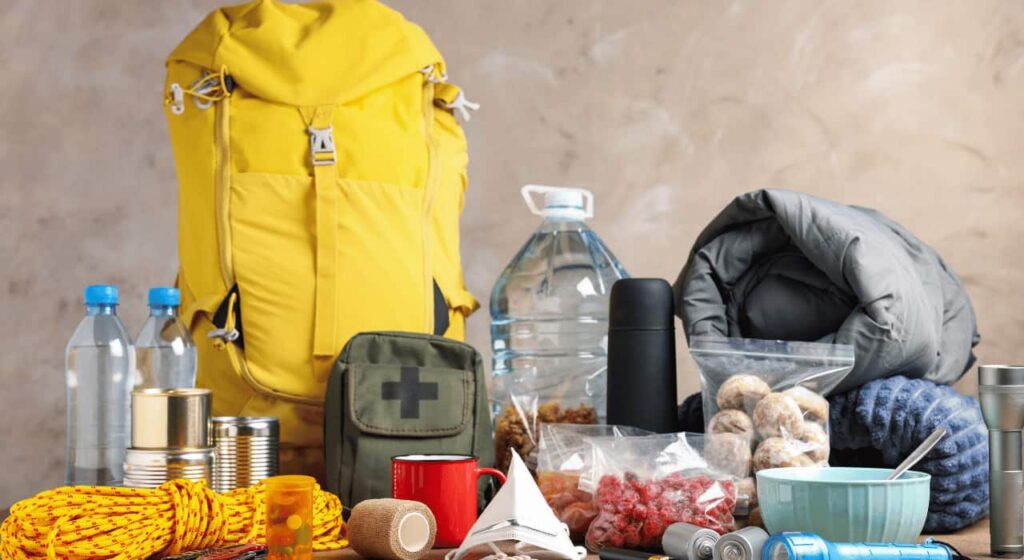
After a major quake, utilities like electricity, gas, and water may stop, and stores might be closed. Prepare an Emergency Go-Bag(防災バッグ, Bousai bag) with enough supplies to sustain yourself for a minimum of 3 days.
| Essentials (3-Day Supply) | Highly Recommended for Foreign Residents |
| Water (3 liters per person per day) | Copy of your Residence Card (Zairyu Card) |
| Food (Canned goods, retort pouches, nutritional bars) | Copy of your Passport |
| Portable radio, flashlight, spare batteries | Japanese Cheat Sheet (Key emergency phrases, names of medication, etc.) |
| First-aid kit, regular medication, work gloves | Means to contact family/home country (check international call plans, apps) |
Where Can You Buy Disaster Supplies?
You can easily purchase earthquake preparedness goods at the following locations:
- Home Centers (e.g., Cainz, Kōnan, DCM): You’ll find furniture anchoring tools, large packs of emergency food, and complete disaster backpack kits.
- Large Retailers/Electronics Stores (e.g., Donki, Yodobashi Camera): They stock a wide range of goods like flashlights, radios, and portable toilets.
- Online Stores (e.g., Amazon, Rakuten): Many comprehensive emergency go-bag sets are available for purchase.
II. During and After the Earthquake: Actions and Information
1. Immediate Actions During Shaking (3-Step Rule)

Step 1: Personal Safety (DROP, COVER, HOLD ON)
-
- DROP: Get low to the ground.
- COVER: Protect your head with a cushion or bag and get under a sturdy table.
- HOLD ON: Hold onto the object you are under until the shaking completely stops.
- Crucially, do not rush outside during the shaking.
Step 2: Securing Fire and Exit
-
- Once the shaking has subsided, check any active flames (stoves, gas heaters) and safely extinguish them.
- Open doors and windows to ensure an escape route (severe shaking can warp structures, preventing doors from opening).
Step 3: Get Reliable Information
-
- Check for information from official public sources via TV, radio, or smartphone.
- Be vigilant against unverified information or rumors (known as dema).
2. Reliable Information Sources (Multilingual Support)
Accurate disaster information is crucial for preventing panic and saving lives. Download these multilingual resources beforehand:
| Source | Description |
| Safety Tips (app) | Delivers push notifications for Early Earthquake Warnings, Tsunami Warnings, and Weather Warnings in multiple languages. Includes an evacuation flowchart and a feature to search for nearby shelters. |
| Japan Safe Travel Information (web) | Consolidates nationwide disaster, transportation, and medical information. Allows users to check useful links for emergencies and contact details for illness or injury. |
| NHK WORLD JAPAN (web) | Delivers the latest news accurately and swiftly in multiple languages (English, Chinese, Korean, etc.) during disasters. Live streaming and on-demand content are also available. |
III. Post-Event Mindset and The Importance of Community
1. What Foreign Residents Should Know

- Utilize Support Systems: In affected areas, international associations and volunteer groups provide support for foreigners, including interpretation and life counseling. Pay attention to information from your local municipality.
- Commuting During Disruption: If a major earthquake stops all public transport, the basic rule in Japan is NOT to attempt to walk home. You are expected to wait at your workplace or designated temporary shelter (like a school gymnasium) to prioritize the passage of emergency vehicles.
2. Maintaining Mental Health
- Share Your Concerns: Disasters in an unfamiliar environment can cause significant stress. It is vital to talk to colleagues or trusted friends about any anxiety or experiences you’ve had.
- Return to Routine: Once the situation stabilizes, gradually resume daily activities, including work and hobbies. Restoring your life’s routine is key to psychological stability.
Conclusion
Earthquakes are a reality of living in Japan, but they do not have to be a source of constant dread.
“備えあれば憂いなし, Sonae Areba Urei Nashi” (If there is preparation, there will be no worry)—this proverb underscores that preparation and securing accurate information are the pillars of a safe life here.
After reading this article, please take a small, tangible step:
“Check your Emergency Go-Bag” or “Download the Safety Tips app.” Talisman supports you in making your career and life in Japan safe and secure.
For more articles
 Subscribe to the Newsletter