

Fast-growing space businesses are driving a new era of innovation, and Japan is home to companies boldly taking on this challenge with cutting-edge ideas and technologies. In this “SpaceTech Company Spotlight” series, we interview professionals from leading Japanese space companies to explore their vision, technology, challenges, work culture, and the kind of talent they seek.
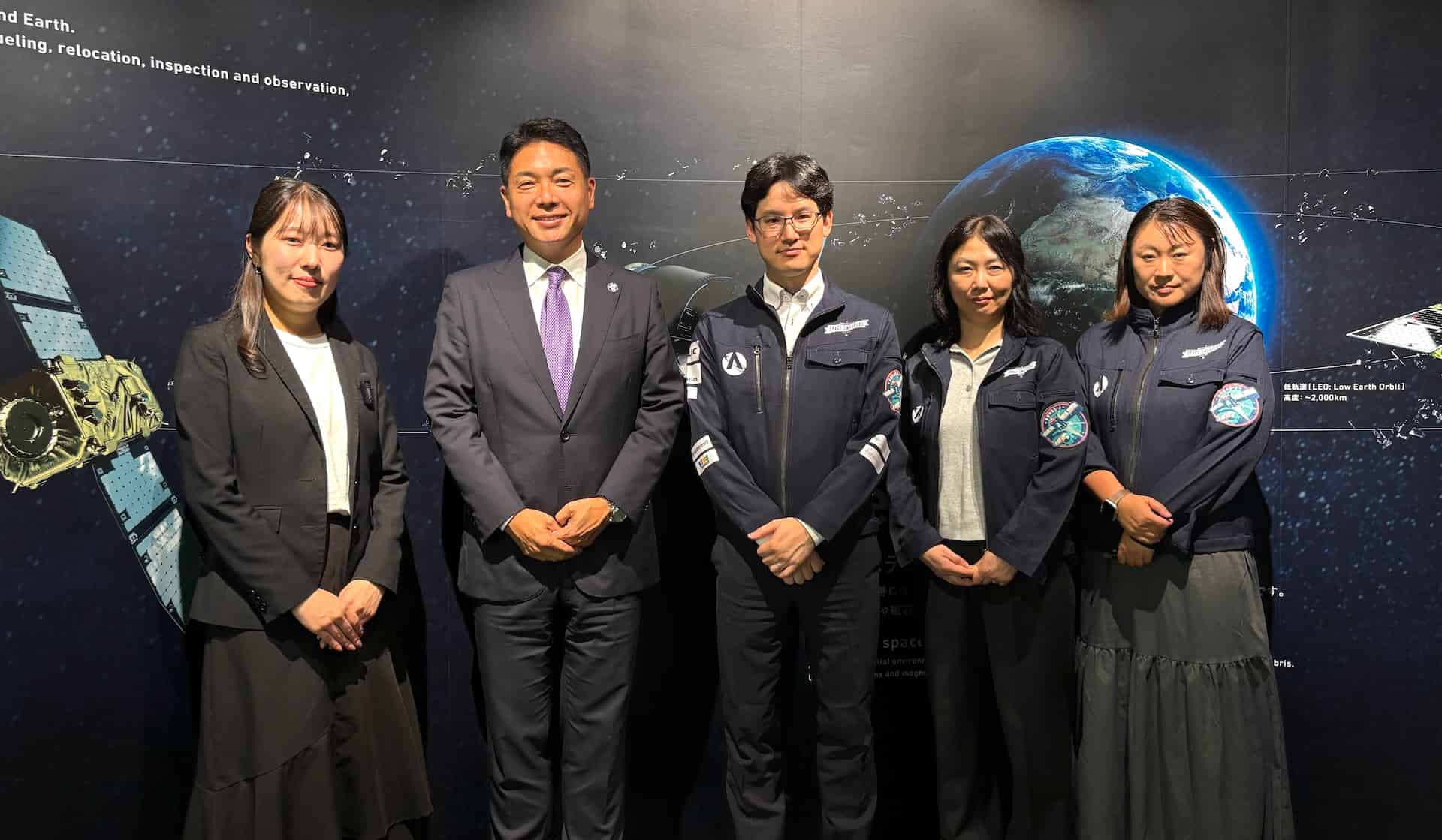
This time, we visited Astroscale Japan Inc., a global pioneer in “On-Orbit Services”—the emerging infrastructure for sustainable space development—to interview the key leaders driving their momentum.
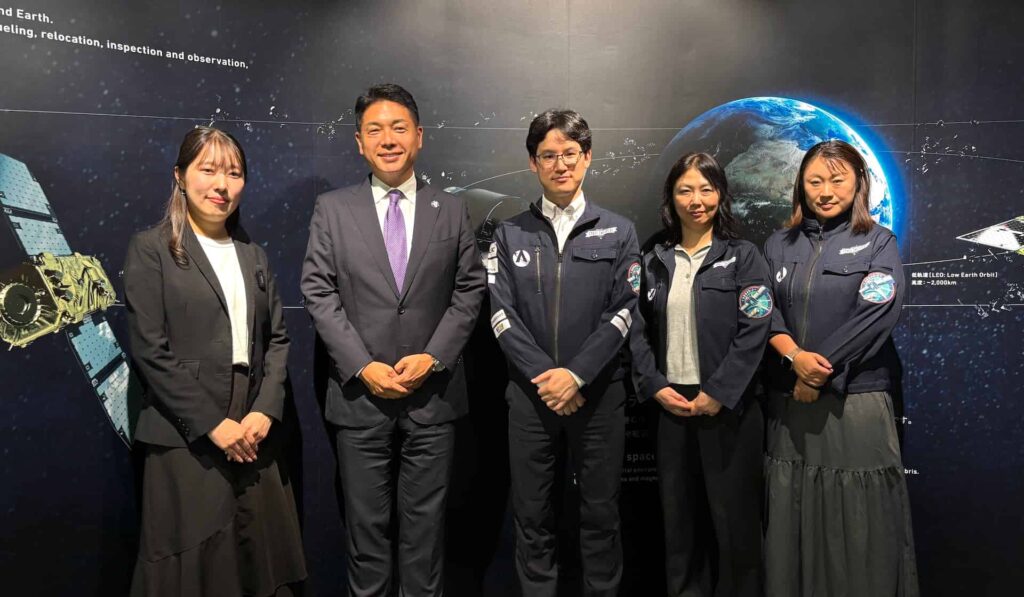
Guests: Nobu Okada (Representative Director and President, Group CEO of Astroscale), Chief Engineer Inoue, GNC Manager Kaneko, Senior Specialist & HRBP Ishizuka
Interviewer: Hokama, Consultant at Talisman Corporation
*This article is a re-edited version based on the video below. You can watch the same content in the video.
What Are “On-Orbit Services”—The Infrastructure of Space?
ーー To start, could you tell us about Astroscale and what “on-orbit services” entail?
Okada: Astroscale is dedicated to making space safe and sustainable. Left unchecked, space will become unusable. To change this, we are building infrastructure in space through what we call “on-orbit services.” This covers the entire lifecycle of satellites—including inspection, observation, repair, refueling, and end-of-life removal—all performed directly in orbit.
We have pioneered this new frontier ahead of the world. When we founded the company with the goal to “clean up space junk,” hardly anyone even knew the term “space debris.” Today, it is recognized globally by the UN, G7, and major news outlets. Yet, there is still so much to do. Across technology, business, and regulatory frameworks, every day feels like tackling one mountain after another.
Three Missions Currently Underway
ーー Could you share an update on your current active missions?
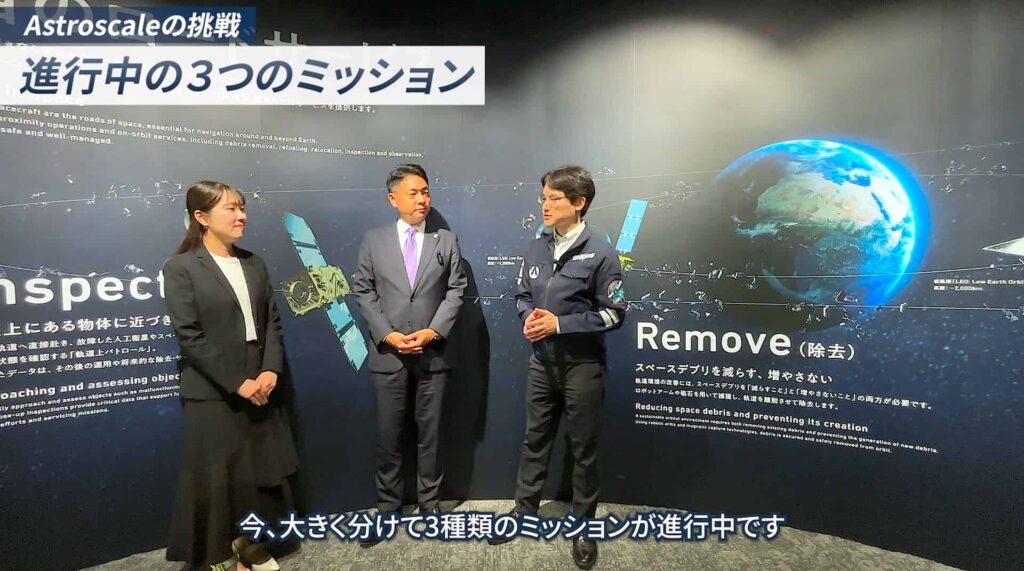
Inoue: We currently have three main missions underway. The first is an inspection mission, where we plan to inspect two large rocket bodies in the future. The second is a debris removal mission, which involves capturing the H-IIA upper stage inspected during our ADRAS-J mission and altering its orbit. Lastly, we have a refueling mission, where we plan to refuel satellites in low Earth orbit.
Okada: Our most recent mission was designed to verify whether we could safely approach a massive piece of space debris originating from a Japanese launch—about 11 meters long and weighing 3 tons, roughly the size of a bus—prior to capture and removal. We approached an object moving at 7 to 8 kilometers per second and successfully captured the world’s first close-up photo of space debris. Seeing that image was an unforgettable moment for all of us, wasn’t it?
Inoue: Absolutely. There was a tense wait between capturing the photo and downlinking the data, and when we finally viewed it together, the excitement was overwhelming.
Okada: Because space debris travels at incredible speeds, we had to achieve precise relative station-keeping right in front of it. Looking at the video captured during that mission, my immediate thought was, “We need to clean this up as fast as possible!” It was a truly inspiring milestone. That photograph was later displayed at the United Nations Headquarters Visitor Center in New York, and the mission earned numerous international accolades.
The Technical Excitement of the Missions
Hokama: Central to these on-orbit services is GNC, which serves as the core of Astroscale’s technology. GNC stands for Guidance, Navigation, and Control—the engineering discipline that governs a spacecraft’s trajectory and attitude. Joining us now is Ms. Kaneko, GNC Team Manager, who brings extensive expertise from developing over 20 satellites.
ーー Given your deep expertise in GNC, what unique technical appeal drew you to take on the challenges of on-orbit services at Astroscale?
Kaneko: The satellites I developed in the past were designed to be delivered precisely to a predetermined orbital location. At Astroscale, however, we must approach space debris whose exact location and state are uncertain. In short, it is the ultimate applied engineering problem. Not knowing exactly what you will encounter until you get there is precisely what makes it challenging—and incredibly exciting.
A Deeper Look into Working at Astroscale
ーー How has your experience been since joining Astroscale?
Kaneko: As a global company, we collaborate daily with Astroscale team members around the world, including in the US and the UK. Working alongside colleagues from such diverse backgrounds constantly brings fresh perspectives. While aligning different viewpoints without a predefined blueprint can be challenging, that very complexity makes the work deeply rewarding.
Inoue: The ability to bring a global team together stems from rich experience. Because GNC represents our core capability, having a seasoned veteran like her leading the team gives us immense confidence.
Understanding Rendezvous and Proximity Operations (RPO)
Inoue: One of Astroscale’s core technologies is Rendezvous and Proximity Operations (RPO). Applying this capability enables us to deliver a wide array of services in orbit.
ーー Could you elaborate on what Rendezvous and Proximity Operations (RPO) involves?
Kaneko: RPO refers to the precise control required to approach an uncooperative target—such as space debris—while continuously estimating its position, orientation, and motion in real time.
Because a target’s exact orientation cannot be determined from ground observations alone, we must close the distance, inspect it firsthand, and dynamically adjust our own spacecraft’s position and attitude accordingly.
Who Thrives at Astroscale?
ーー Joining us now is Ms. Ishizuka from HR. Is there a shared mindset among Astroscale engineers who continue to pioneer world-first missions?
Ishizuka:Most engineers at Astroscale thrive on tackling unprecedented problems without clear answers, placing immense value on seeing a mission through to success.
ーー Delivering results in the uncertain environment of space—that relentless focus is your common language. For senior engineers with rich experience in other industries, applying their expertise to unsolved problems must be a deeply compelling challenge.
Inoue: Exactly. Rather than waiting for instructions, we look for individuals who proactively identify challenges and drive solutions themselves.
ーー Beyond technical expertise, what mindset is essential to succeed here? What makes someone a great fit?
Ishizuka: In addition to aligning with our vision, our organization is still evolving. We look for individuals who enjoy building the organization alongside us and solving structural challenges as a team.
ーー What talent strategy are you employing to shape the organization at this stage?
Ishizuka: We are transitioning from establishing precedents to scaling our operations into a sustainable business. While space domain expertise is valuable, bringing in perspectives from other sectors will accelerate the growth of our on-orbit services. That is why we are actively recruiting specialists across a wide range of industries beyond traditional aerospace.
ーー So you are intentionally building a multidisciplinary team to advance on-orbit services. What expectations do you have for senior engineers joining from other sectors?
Inoue: Expertise in mass production, quality assurance, and agile development cultivated in other industries is critical to transforming space operations into true infrastructure. We want to work with professionals who can leverage that experience to build revolutionary services in space.
ーー So the standard practices of other industries are essential puzzle pieces for today’s space business. With that in mind, could you highlight the key roles you are currently focusing on?
Ishizuka: We are looking for talented engineers to ensure the continuous success of our missions. We are particularly focused on satellite development roles, including systems, missions, GNC, and robotics. We welcome applicants from all industrial backgrounds who resonate with our vision.
ーー “Prioritizing core engineering capability over prior space knowledge”—that message must be very encouraging for engineers interested in space. What future do you hope to build together with engineers joining from various sectors?
Okada: Our ultimate goal is to make space safe and sustainable. The journey is far from easy, but for anyone who wants to work with cutting-edge technology, collaborate with global peers, and experience a genuinely exciting career, we strongly encourage you to apply.
Editor’s Note
Hokama, Talisman Corporation
Through this interview, it became clear that the grand vision of “making space safe and sustainable” is not a distant dream, but a reality being steadily forged through relentless engineering and deliberate organizational growth.
The engineers tackling the “ultimate applied problem” of approaching high-speed space debris exhibited a genuine passion for unprecedented challenges and an unwavering determination to succeed. Furthermore, the talent strategy of prioritizing core engineering capabilities over domain-specific space knowledge serves as a powerful invitation to professionals considering a transition into this field.
Creating answers from scratch alongside colleagues from diverse backgrounds on a global stage—experiencing Astroscale’s dynamic momentum firsthand was an intensely inspiring experience.
I wholeheartedly look forward to seeing this pioneering venture connect with like-minded talent as it continues its remarkable journey to shape the future of space.