

Fast-growing space businesses are driving a new era of innovation, and Japan is home to companies boldly taking on this challenge with cutting-edge ideas and technologies. In this “SpaceTech Company Spotlight” series, we interview professionals from leading Japanese space companies to explore their vision, technology, challenges, work culture, and the kind of talent they seek.
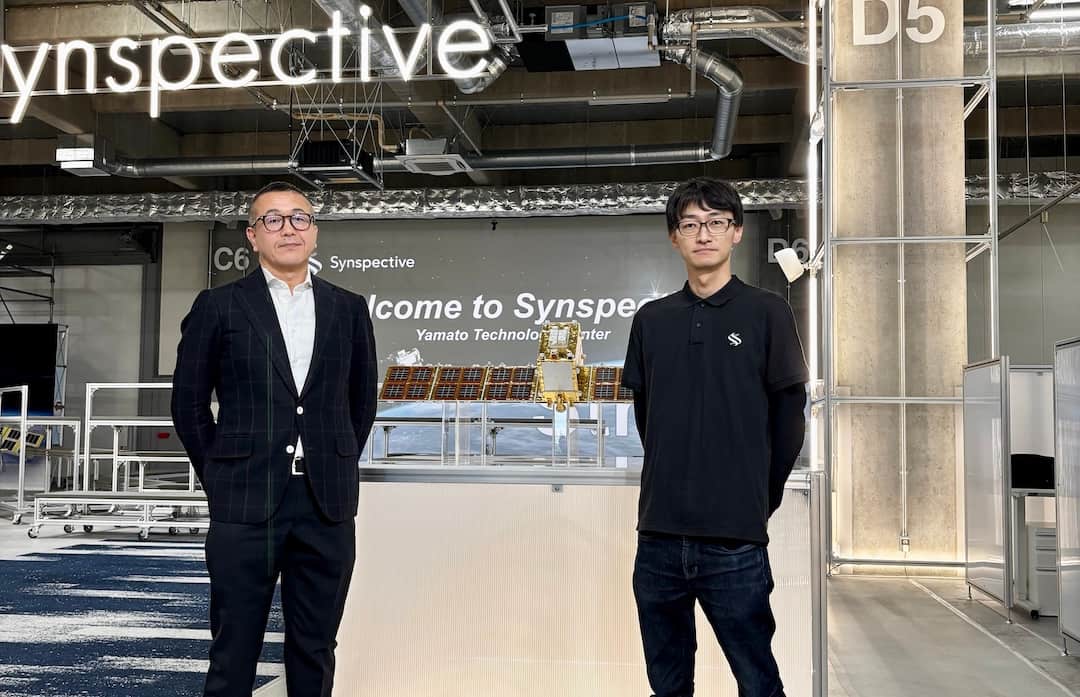
This time, we visited the state-of-the-art facility of Synspective Inc., a company aiming to mass-produce its proprietary small SAR satellites, to learn more about the company’s future vision and the appeal of working there.
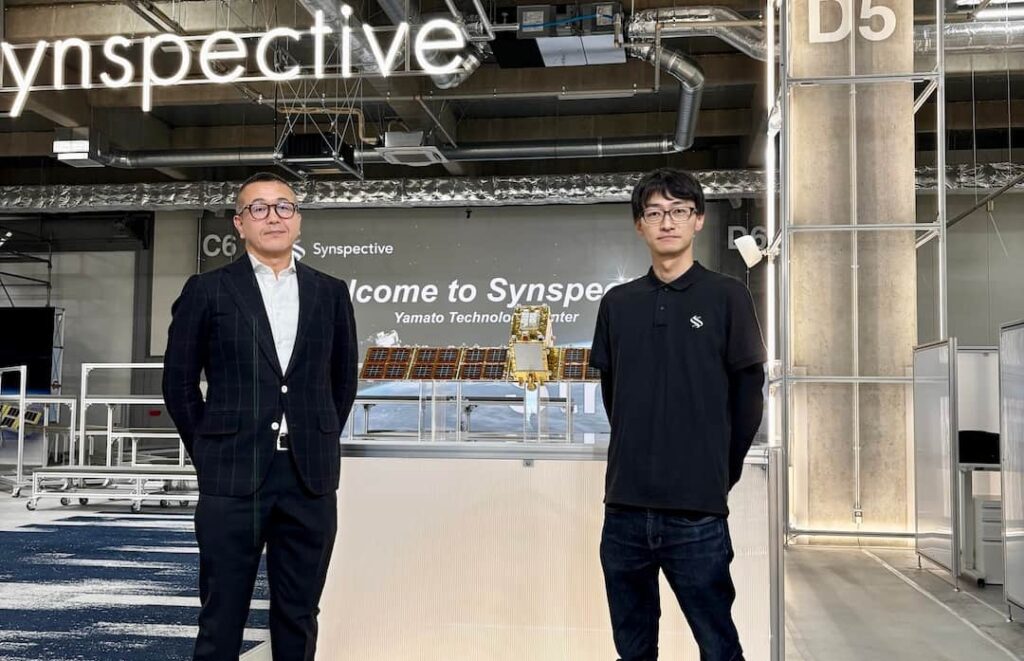
Guest: Yohei Naito, Senior Process Engineer, Synspective Inc.
Interviewers: Fumio Moriuchi, CEO of Talisman Corporation / Ami Hokama, Consultant at Talisman Corporation
※ This article is an edited version based on the video below. You can also watch the full interview in video format.
What Is a “SAR Satellite”?
ーー To begin with, this Yamato Technology Center (located in Yamato City, Kanagawa Prefecture) is a newly operational mass-production site for your compact satellites as of 2024. Could you explain what exactly a “SAR satellite” is?
The “SAR satellites” we develop emit radio waves from space and receive the signals reflected back from the Earth’s surface.
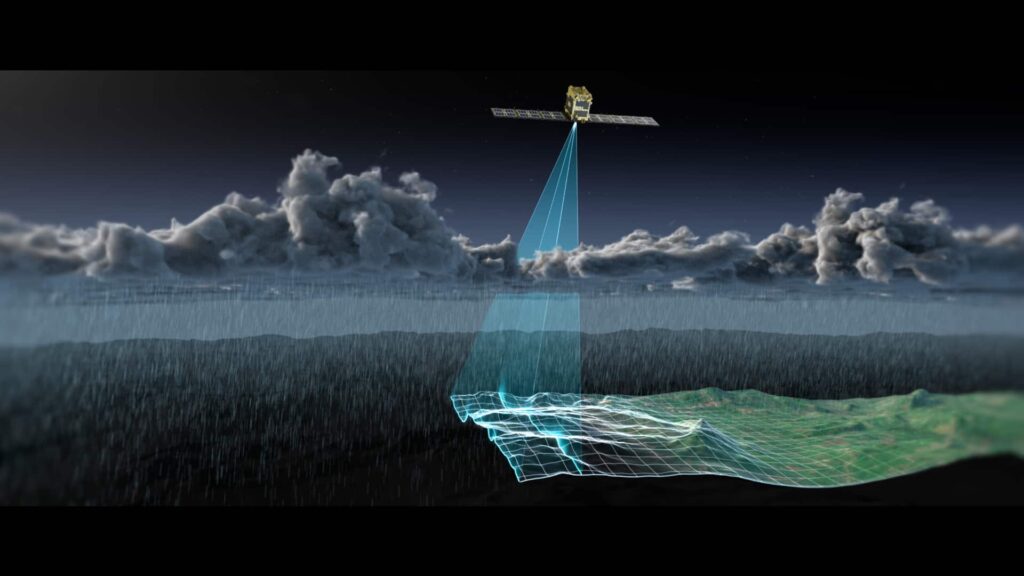
When people think of satellite imagery, they usually imagine photos captured by cameras from above. However, those types of satellites cannot capture clear images at night or when clouds obstruct the view. SAR satellites, on the other hand, use radio waves, which allows them to observe ground conditions even during nighttime or heavy rain.
Synspective’s Challenge: Entering the “Mass Production” Phase of the Space Industry
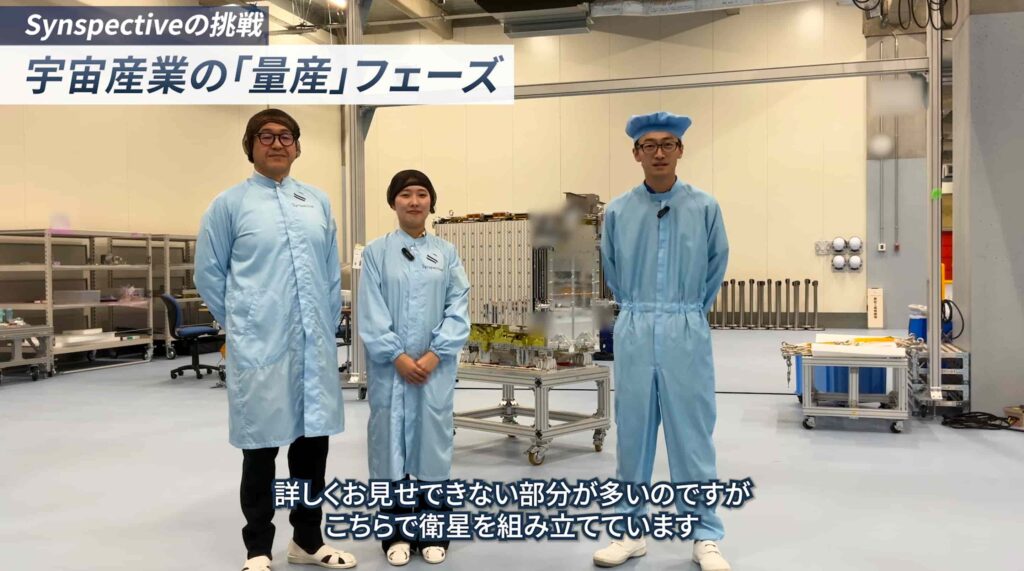
Synspective’s goal is to build a constellation of more than 30 satellites. To achieve this, the company must move beyond traditional “carefully handcrafted manufacturing” and embrace true mass production.
ーー “Mass production” isn’t really a term we commonly associate with the space industry, is it?
That’s right. Which is exactly why Synspective has attracted not only engineers from the space industry, but also manufacturing professionals from industries such as semiconductors and automotive manufacturing. In fact, I myself joined Synspective from a completely different industry.
ーー We’d also like to ask about “technology transfer” within the company.
Satellite assembly requires a tremendous amount of know-how and highly specialized techniques. At the same time, many components are extremely expensive and difficult to replace, making it hard to gain hands-on practice experience.
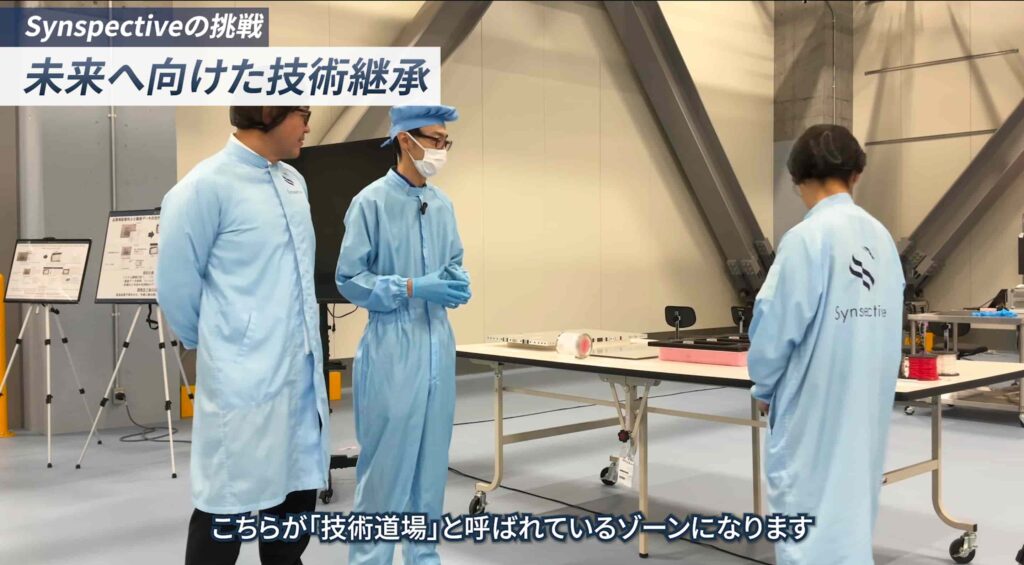
To address this, we created an environment where employees can practice using materials and components that closely resemble actual flight hardware — such as connectors, wiring, plates, and adhesives. This allows experienced engineers to pass on their knowledge and techniques to younger generations in a practical way.
What Is Process Engineering?
ーー Could you explain what “Process Engineering,” your area of responsibility, actually involves?
In short, it’s the job of designing the system for how satellites are built.
Products are created based on design drawings, but even if you follow those drawings, there are still many questions: How can we manufacture efficiently? How can we improve yield rates? How can we maintain high quality while producing quickly? Process Engineering is about designing the entire manufacturing system to achieve those goals.
We collaborate closely with many stakeholders, including design teams, manufacturing teams, procurement teams, and production management teams, to create that system together.
Why Synspective?
ーー Next, could you tell us why you decided to join Synspective?
There were two main reasons. First, I had always been very interested in the space industry. At the same time, I felt tremendous potential in the fact that the industry was shifting from carefully crafting individual satellites to a phase focused on mass production and scalable manufacturing.
Second, Synspective was unique in that it not only manufactures satellites in-house, but also provides end-to-end solutions — including how satellite data is delivered to customers and how it can be utilized. That one-stop approach was very attractive to me.
ーー How has your previous experience contributed to your current role?
Throughout my career, I’ve consistently been involved in manufacturing. My background includes industries such as semiconductors and analytical equipment, which are very different from space. However, the fundamental principles of manufacturing remain the same.
For example, concepts such as DFA/DFM* and rapidly cycling through PDCA processes are universal. I feel that my past experience has translated very effectively into this industry as well.
*DFA (Design for Assembly) / DFM (Design for Manufacturability): Design approaches aimed at improving product quality, reducing costs, and shortening development timelines.
ーー What makes working at Synspective uniquely exciting? And what are the biggest challenges?
One of the most exciting aspects unique to the space industry is the tangible feeling that something you personally worked on is loaded onto a rocket, launched into space, begins orbiting the Earth, and eventually delivers actual data back to us. There’s a very real sense of connection and impact in that process.
Of course, satellites must survive extremely harsh environments — vacuum conditions, intense temperature fluctuations, and radiation exposure. These are incredibly difficult conditions from a manufacturing perspective.
At the same time, mass production requires us to keep costs low and move quickly. Balancing these harsh technical requirements with economic efficiency is a challenging but highly rewarding part of the job.
What Kind of Talent Is Synspective Looking For?
ーー As the company enters its mass-production phase, I assume hiring is also accelerating. What kind of people would you like to work with?
Like myself, I don’t think candidates necessarily need to come from the space industry.
In fact, the space industry can still be quite legacy-driven in many ways. That’s why we value people who can question conventional assumptions in manufacturing and who are willing to speak up when they notice inefficiencies or problems.
Additionally, since so many people are involved in the process, we want individuals who can bring together design teams, manufacturing teams, and surrounding stakeholders — or at least have the motivation to do so.
ーー Finally, do you have a message for our readers?
The space industry is currently undergoing a major transformation — shifting from a world of individually handcrafted products to one focused on mass production and industrialization.
This creates enormous opportunities for people to fully apply their manufacturing skills and experience. At Synspective, we are looking for individuals who want to take on the challenge of this exciting new phase of industrialization and mass production. We look forward to meeting you.
ーー If this interview sparked your interest, be sure to check out their job opportunities and consider applying. Thank you very much for your time today.
Thank you very much.
 After the Interview Fumio Moriuchi, CEO of Talisman Corporation The Yamato Technology Center we visited this time was truly an inspiring place where the future of Japan’s space industry is taking shape. I still vividly remember the cool air and sense of excitement I felt the moment I stepped inside the clean, cutting-edge facility.
What impressed me most during the interview was Mr. Naito’s use of the phrase “a tangible feeling.” He entered the space industry from a completely different field and is now designing manufacturing systems for satellites that actually launch into space and deliver Earth observation data back to society. His passionate expression while speaking made it clear that this is not simply “work,” but a genuine sense of pride in helping build the history of a new industry.
Because the space industry is currently transitioning from handcrafted production to industrial-scale manufacturing, the manufacturing expertise and “questioning mindset” developed in industries such as automotive and semiconductors can become incredibly powerful assets here. I believe this reality offers tremendous hope to many engineers.
For those who want to challenge themselves on the grand stage of space and scale their skills to an entirely new level, I strongly felt that Synspective offers a truly one-of-a-kind opportunity. Mr. Naito, and everyone at Synspective who supported this interview — thank you very much for sharing your valuable insights with us.